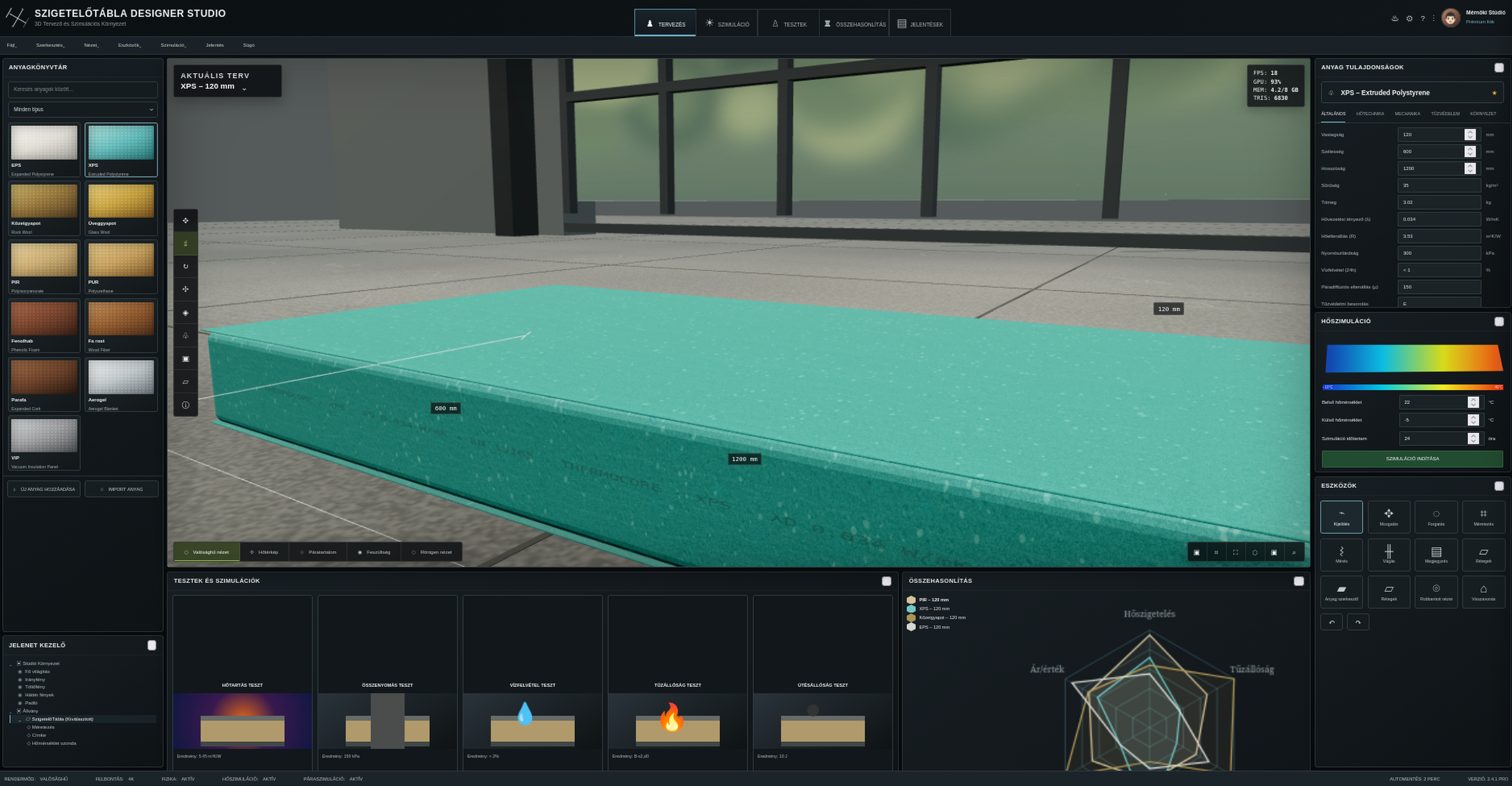
An AI-driven 3D insulation board showcase and engineering demo platform combining ultra-realistic PBR visualization, interactive material exploration, physics-aware simulation, thermal analysis and an integrated digital commerce environment.
The challenge
Szigetelőtábla.hu required a modern product experience capable of presenting insulation boards not simply as static catalogue products, but as interactive technical objects that users can inspect, configure, compare and simulate in a realistic 3D environment.
The challenge was to combine an ultra-realistic WebGL product viewer with detailed material properties, layered construction visualization, interactive measurements, section views, exploded views, physics-aware interaction and engineering-oriented simulations. The platform needed to communicate complex thermal, mechanical, moisture and material information through an accessible visual interface while preserving the technical depth expe
Szigetelőtábla.hu is an AI-driven 3D insulation-product showcase and engineering demo environment designed to demonstrate a new generation of digital experiences for building-material products. The platform combines an immersive product presentation with technical inspection, material analysis, simulation and commerce-oriented functionality in a single browser-based application. The core product experience presents insulation boards inside an interactive ultra-realistic 3D environment. Users can rotate, move and zoom the product, inspect its dimensions and explore the physical structure from multiple viewpoints. The system supports realistic perspective visualization together with technical interaction modes such as section views, layer inspection, measurement and exploded representations of the product structure. The product model is designed around structured technical metadata rather than treating the insulation board as a simple 3D mesh. Dimensions, density, thermal conductivity, thermal resistance, compressive strength, water absorption, vapour-diffusion resistance, fire classification and operating-temperature ranges can be associated with the same product definition that drives the visual representation. This establishes a foundation for connecting visual product exploration with engineering data. The PBR rendering system is designed to reproduce the visual characteristics of insulation materials with physically based material response. Surface properties can incorporate diffuse/albedo information, normal or bump detail, roughness, ambient occlusion, metallic response and other material parameters. The result is a significantly more realistic representation of the product surface, edges, reflective facings and layered construction than a conventional static product image. A dedicated layer-inspection system allows the internal structure of the insulation assembly to be explored. Users can reveal construction layers, inspect individual material components and switch between conventional realistic visualization and technical x-ray or exploded representations. This creates a direct visual bridge between the physical product and its engineering structure. The platform also introduces interactive engineering simulation concepts. Thermal simulation can model the relationship between internal and external temperatures and the thermal resistance of the selected insulation configuration. Additional demonstration modes include pressure or compression testing, water-absorption behaviour, fire-performance visualization and impact-resistance scenarios. These simulations are presented as interactive technical experiences rather than static specification tables. The simulation environment includes a timeline and playback controls, enabling users to observe simulation states over time. Parameters can be configured before execution, allowing the demo architecture to evolve toward more sophisticated server-side or GPU-accelerated engineering calculations, calibrated material models and professionally validated simulation workflows. Physics-aware interaction further extends the product showcase. Instead of treating every product element as a purely visual object, the environment can associate physical characteristics and constraints with the insulation board. This provides a foundation for realistic manipulation, collision behaviour, placement validation and future construction-oriented scene composition. The platform includes an engineering-oriented 3D Studio environment where materials can be searched, imported and managed. A scene hierarchy exposes the studio environment, lighting, floor, product object, dimensions, labels and measurement probes. This creates a workspace resembling a lightweight digital engineering and visualization studio rather than a conventional product page. The material system provides a structured material library with general, thermal, mechanical, fire-safety and environmental properties. Material records can contain dimensions, density, mass, thermal conductivity, thermal resistance, compressive strength, water absorption, vapour-diffusion resistance, fire classification and operating temperature. This data-centric approach allows the visualization, simulation and catalogue layers to share a common technical source of truth. The commerce layer connects the 3D product experience with an online-store concept. Products can expose pricing, stock status, delivery information, quantities, cart interactions and checkout-oriented workflows. The architecture is designed so that a visitor can move from technical product exploration to a commercial action without leaving the immersive product environment. The catalogue layer can manage product categories, products, materials and PBR texture assets, while operational features can cover stock and pricing, releases, revisions and activity logging. This provides a foundation for maintaining a structured digital catalogue in which product information, visualization assets, technical properties and commercial data remain connected. AI integration extends the platform into an intelligent product and engineering assistant. Users can communicate requirements or questions using natural language, while the AI can interpret product specifications, explain technical properties, compare insulation materials, recommend suitable configurations and guide users through the 3D Studio. Future AI capabilities can translate natural-language instructions into actions such as selecting a material, changing a thickness, opening a technical view, initiating a simulation or generating a comparison report. The AI layer is designed as an orchestration interface over the underlying product, material, visualization and simulation capabilities rather than as an isolated chatbot. This architecture makes it possible for AI interactions to remain grounded in structured product and engineering data while directly controlling relevant application functions. The reporting layer provides a foundation for generating structured technical reports from selected products and simulations. Future versions can extend this capability with downloadable reports, project snapshots, specification sheets, comparison matrices, calculation summaries and machine-readable engineering data. From a technical perspective, the application is structured as a modern browser-based interactive 3D system. Next.js can provide the application and API foundation, React and TypeScript the interactive interface, Three.js and React Three Fiber the real-time 3D environment, WebGL the hardware-accelerated rendering layer and a dedicated physics engine the physical interaction and simulation foundation. The architecture can be extended with GPU computation, Web Workers and server-side processing as simulation complexity increases. Performance is treated as an important part of the 3D experience. Real-time rendering statistics, adaptive rendering strategies, scene optimization, geometry management and controlled material complexity provide the foundation for maintaining smooth interaction while increasing visual fidelity and simulation complexity. The project is currently under development. The present application functions as a demonstration and technology foundation rather than a final production implementation. Its architecture is intended to evolve toward a complete digital insulation-material ecosystem with expanded product catalogues, authenticated customer accounts, advanced engineering calculations, validated simulation models, project saving, quotation generation, document management, BIM/CAD integration, analytics, automated product recommendations and deeper AI-assisted engineering workflows. The resulting Szigetelőtábla.hu concept demonstrates how a traditional insulation-material catalogue can evolve into an interactive digital engineering environment where products can be explored visually, inspected technically, simulated physically and thermally, compared against alternatives and eventually purchased through the same unified experience.
SymmetrixaE-Commerce · 3D Product Visualization · Carpet Design2026
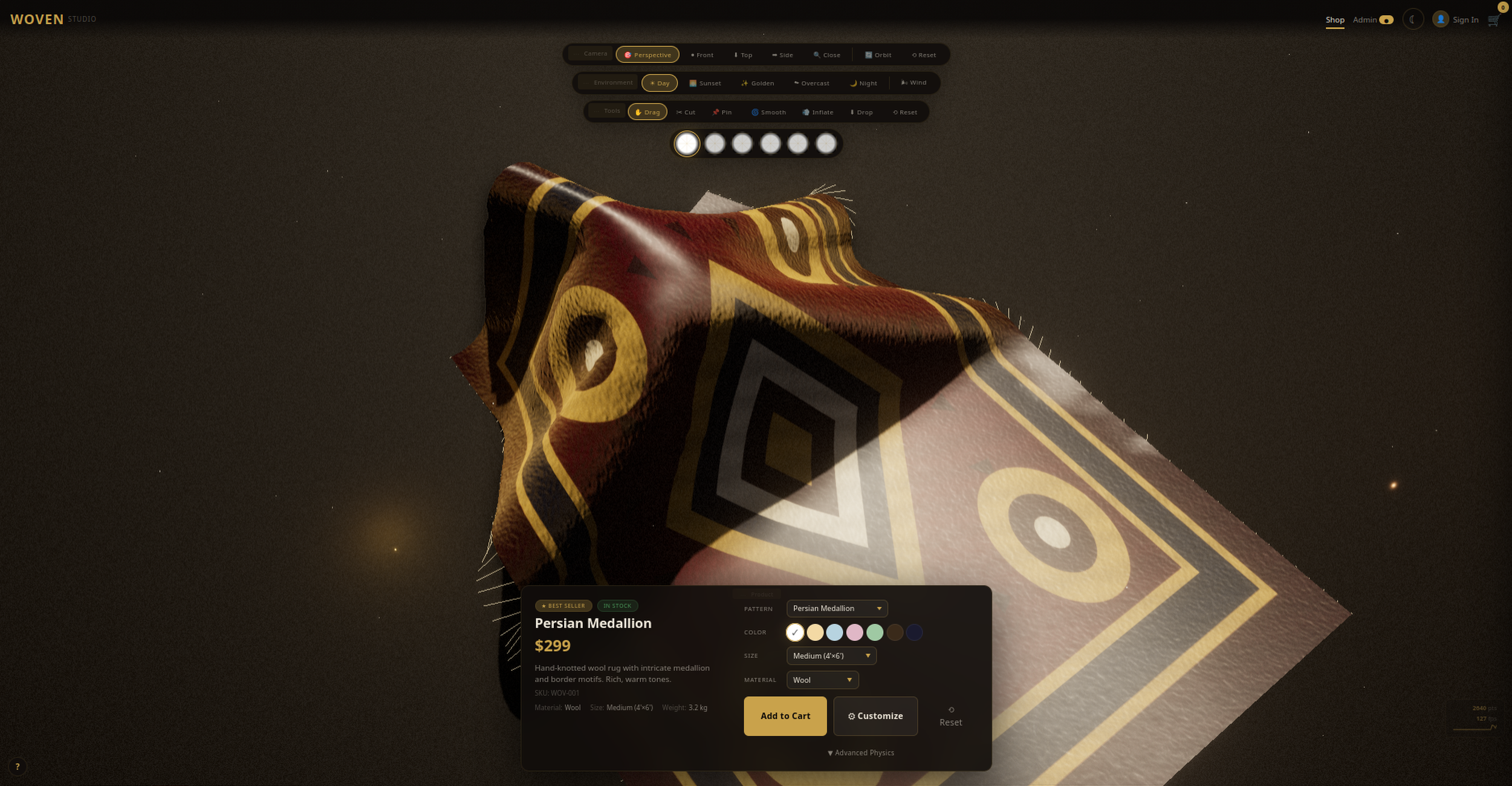
WOVEN 3D - AI-Driven Ultra-Realistic Carpet Showcase & Online Store
An AI-driven ultra-realistic 3D carpet showcase and online store demo combining physically simulated carpet behaviour, real-time PBR materials, interactive product customization and e-commerce workflows in a browser-based experience.
An interactive AI-enhanced 3D kitchen design platform transforming furniture configuration, spatial planning and visualization into a browser-based, photorealistic design experience.
3Dinteractive kitchen design environment
AIintelligent design assistance
2D↔3Dsynchronized planning views
Let's BuildYour AIAdvantage.
Tell us your use case. We'll identify where AI creates the most leverage — no commitment required.